
The Architecture of Forever : An Audit of Love, Entropy, and Certainty
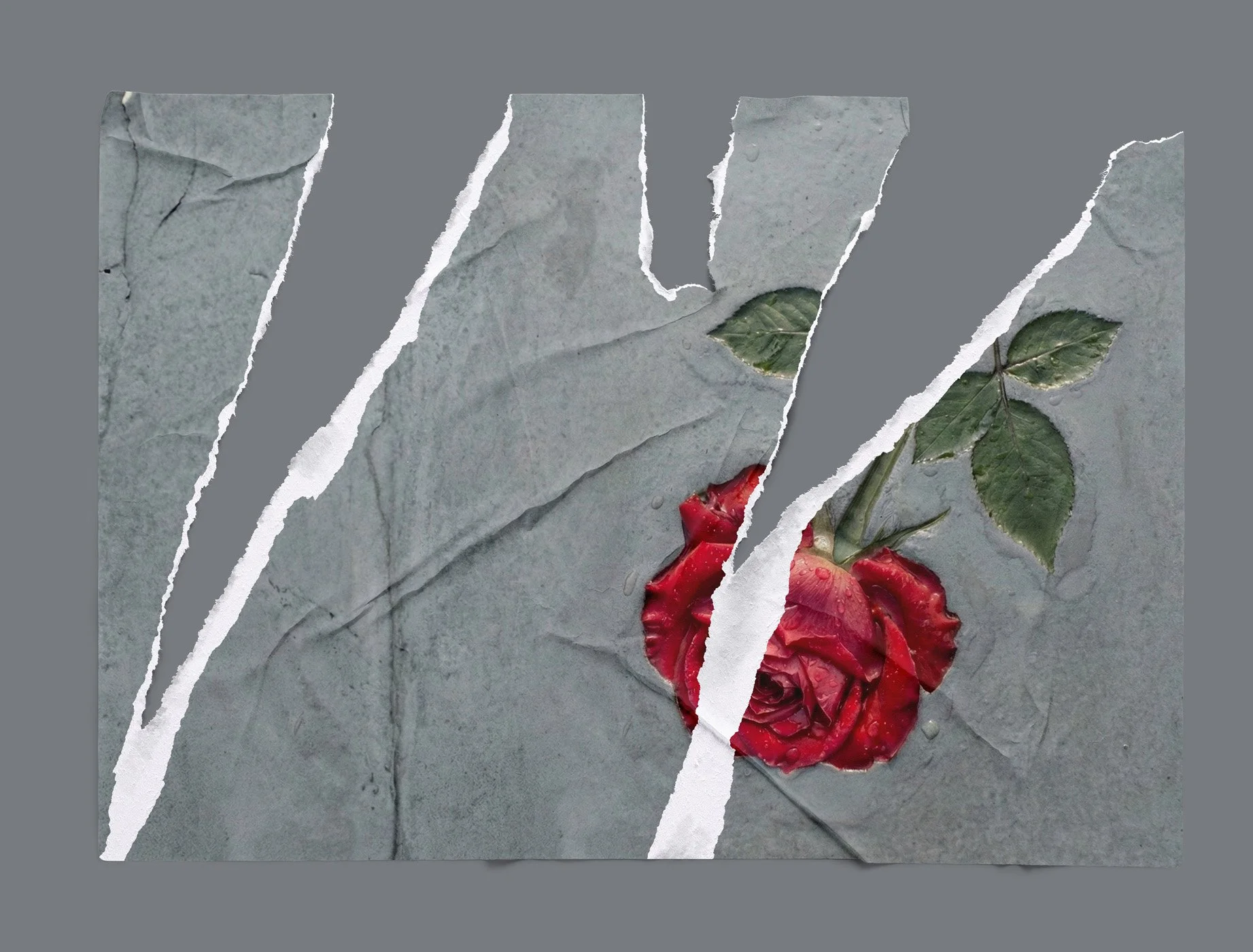
An Audit of Love, Entropy, and Certainty
Section: The Case Study
Date:13 February 2026
Filed under: Emotional Economics / Pattern Recognition
The Brief
Valentine's Day approaches. The air is thick with algorithmically curated anxiety. This week, love is priced by algorithms; anxiety is listed as an SKU. Love seems less like a feeling and more like a Performance Review.
In this file, we do not audit romance; we audit fear.
Why does the price of a white dress double the moment it is labelled "bridal"? Why, knowing that diamonds are a product of inventory control, do we still despise the perfect, inexpensive lab-grown stone and crave the pain of "three months' salary"?
This is an investigation into "Contractual Materialisation". We are auditing how humanity attempts to use the hardest physical entity (the diamond) and the most expensive ritual (the wedding) to forcibly solidify a gas that is, biologically speaking, destined to flow: Love.
Dimension 1: The Invoice The Anxiety Tax & The Torn Dress
It begins with that eye-watering quotation. When you ask the florist why wedding roses cost three times the standard rate, the answer is usually "craftsmanship". But in the eyes of an auditor, this premium has a more honest name: The Anxiety Tax.
A wedding is defined as a live broadcast with zero-error tolerance. The premium you pay is not for the flowers; it is Emotional Labour Insurance. You are paying the vendor to carry the massive mental load that "imperfection is a curse".
The Historical Glitch: Look at that expensive, floor-length gown you will wear only once. In the common narrative of pop-culture history, the Victorian white veil wasn't just about "Purity"; it was a display of disposable decency. In an era lacking modern cleaning technology, this was indeed a form of Conspicuous Consumption. Royal Versailles was later universalised into a middle-class moral imagination.
Even more intriguing is the custom of "tossing the bouquet". While origin stories vary, one prevalent version points to a function of "distraction"—to prevent guests from physically tearing the bride's clothes to shreds to snatch a piece of luck (as was the medieval custom), the bride threw the bouquet as a decoy. Whichever version you believe, the wedding has always retained a base layer of prayer and protection, occasionally casting a shadow of "snatching luck".
Dimension 2: The Stone Costly Signalling & The Iron Ring
To further eliminate uncertainty, we require a Physical Save Point.
The Signal: Why are we obsessed with the "three months' salary" rule? Why do we look down on perfect lab-grown stones? According to the "Handicap Principle" in evolutionary psychology, cheap signals are easy to forge; expensive signals are hard to fake. Thus, the diamond ring is designed so that "expense is the function". This is Costly Signalling.
We no longer use iron rings to symbolise ownership as the Romans did; we use the sunk cost of "three months' salary" to lock in the relationship. This is a pre-paid penalty for breach of contract. We are using the weight of money to pin down the drifting insecurity within a relationship.
Dimension 3: The Ritual The Climax Error & Collective Projection
We have the bond (the invoice) and the collateral (the stone); now we need a grand signing ceremony. The greatest structural error of the modern wedding is that it is designed as a "Season Finale", rather than a "Pilot Episode".
On that day, catalysed by lighting, music, and alcohol, we undergo a collective Psychological Regression.
The groom is no longer John, who snores; he is the omnipotent Animus (the Hero archetype).
The bride is no longer Jane, who gets anxious; she is the perfect Anima (the Goddess archetype).
We are marrying a phantom. All the guests are paid extras in this "Hyperreality" performance. We collectively maintain a perfect lie: as long as the ritual is grand enough, happiness is inevitable.
However, multiple observations show a negative correlation between wedding spending and stability—correlation, not causation—but it reveals a structural illusion: we mistake the "end" for the "start". This is The Climax Error. We deplete all our dopamine on Day 1. When the lights go out and the stage that cost a fortune is dismantled, we face a massive "Reality Depression".
The Pivot: The Concrete Cracks The day the concrete cracks
The moment the wedding ends is when the real audit begins. The Second Law of Thermodynamics retakes control of your life. The Animus who vowed "until death do us part" is now lying on the sofa scrolling through his phone, too lazy to take out the rubbish.
This is the moment most people feel "cheated". You thought you had bought out Eternity. You merely bought an admission ticket. From CapEx (Capital Expenditure) to OpEx (Operational Expenditure), the story has only just begun.
Dimension 4: The Maintenance Operating with Entropy
If the wedding was a (failed) attempt to fight entropy, then marriage is the (arduous) operation of conforming to entropy.
Scientists tell us that Phenethylamine (PEA)—the love hormone that makes your heart race—has a half-life of approximately 18 months. When the half-life arrives and the dopamine fades, this is an anti-addiction mechanism written into our genes, not a malfunction. Mature love is accepting the fuel switch from "Rocket Fuel" (Dopamine) to "Nuclear Energy" (Oxytocin).
True luxury is not the stone that never changes, but Dynamic Balance. The death of many relationships is caused not by a lack of gifts on Valentine's Day (Strategic Maintenance), but by the failure to share chores on a Tuesday night (Routine Maintenance).
Silence is expensive. When you are both exhausted, and you hold back a rebuke that is on the tip of your tongue; when you choose "Transformation of Motivation" in that moment—suppressing the immediate selfish impulse for the sake of the long-term relationship—that is a maintenance fee far more expensive than a diamond.
The Verdict
Keep: The Courage to Erode Let us return to Yehliu. Gaze at the Queen's Head rock. Accept that her neck will thin; accept that one day, she will break. True security is not encasing her in reinforced concrete (money/face/contracts) to force a fixation. True security is simply watching her.
Let Go: The Algorithm of Pain Abandon the formula of "How much he spends = How much he loves me". Abandon the magical thinking that "If the wedding isn't perfect, the marriage is doomed". Do not attempt to use dead matter (fossils) to prove the existence of a living thing (love).
Look Elsewhere: Organic Reality True romance happens the morning after the wedding ends, the guests disperse, and the filters are turned off. When you look at that real human being—without the diamond enhancement, aging, imperfect, perhaps even a little annoying—and you still feel: "Although the dopamine hallucination is gone, I am still willing to resist the entropy of these long years with you."
I am willing to let you naturally become yourself, while I become myself. We need not be sealed inside amber; we stand side by side in the wind. Gravity is enough; no glue needed.
R. tobekeep
