
The Sanitised Totem: Why I Wear What I Can’t Swallow
Why I Wear What I Can’t Swallow
Section: The Case Study
Date:04 February 2026
Filed under: Semiotic Audit / Sensory Psychology
The Brief
At the brunch table, I banished the semi-liquid yolk to the periphery of my plate, executing the manoeuvre with the precision of a surgeon performing a resection.
My friend couldn't help but ask: "You don't eat eggs. Why is there a massive fried egg hanging from your bag?"
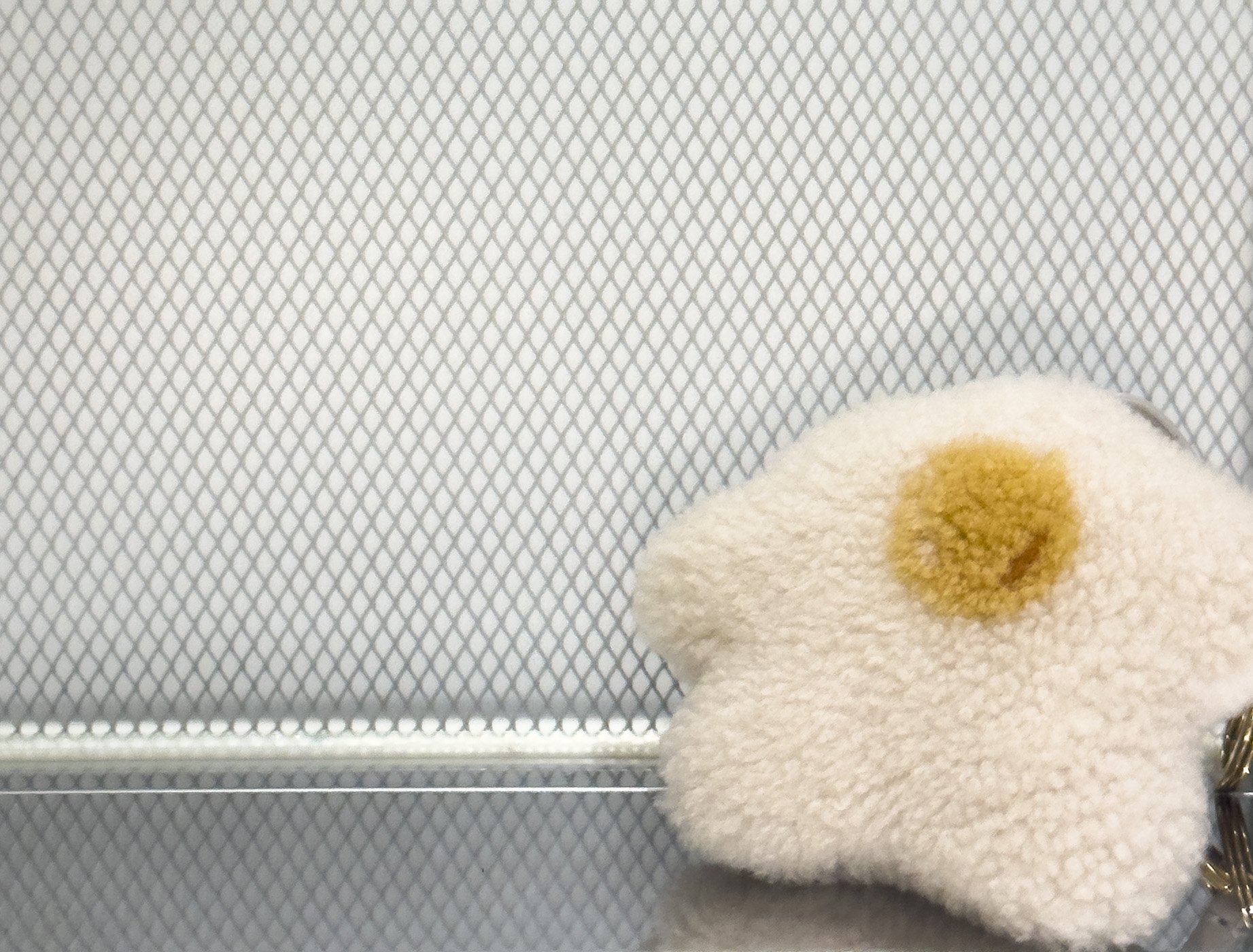
I touched the Anya Hindmarch charm attached to my strap—felted wool, arid, distinctively grey.
"Because," I replied, "I am obsessed with the Image, but I am repulsed by the Flesh."
Dimension 1: The Incision (Surgical Removal)
I don’t want comfort. I want control.
My fear of food is, first and foremost, tactile.
Looking at that rejected, real yolk on the plate—runny, aggressively orange, emitting a certain raw, sulphurous scent that induces physiological suffocation. It is chaotic, wet, and threatens to "breach and leak" at any moment. It is uncontrollable.
It isn’t just the taste; it is a memory from the canteen of a private boarding school: stern teachers, the draconian "Clean Plate Club" rules, and that chalky, dry yolk that required water to wash down.
Back then, my younger self couldn't rebel. I could only cultivate a "False Self"—an obedient pupil who forced herself to swallow to meet expectations.
Now, this charm is a "semiotic operation" on that childhood shadow. I have retained the adorable shell (Socially Acceptable) but excised the nucleus that suffocates me (The Trauma).
"I don't seek consolation; I seek command."
Dimension 2: The Biological Alarm
Some fears cannot be sanitised by fashion.
If that’s the case, why don't I buy a “Coriander/Celery Charm"?
If the aversion to fried eggs is psychological trauma, the aversion to celery (or coriander) is a Genetic Alarm.
As a child, I could force myself to swallow a yolk (social conditioning), but I could not physically permit celery to enter my mouth. Even typing these words makes my stomach perform a reflexive somersault.
The amygdala screams: "Poison!"
Trauma can be sublimated into aesthetics; toxicity cannot.
We can use aesthetics (prefrontal cortex intervention) to suppress trauma, sublimating it into art (buying the egg charm); but we cannot use fashion to "sanitise" a visceral, biological rejection. That isn't an attitude problem; it is a biological threshold.
Dimension 3: The Plushie Defence
Jellycat vs. Anya Hindmarch: Comfort vs. Control.
This explains why I purchased the Anya Hindmarch, yet never felt a flutter of interest in the viral Jellycat egg series.
Jellycat is designed to soothe the inner child. It has smiling eyes, little corduroy legs; it offers a maternal dose of Oxytocin, a placebo for those wishing to regress to infancy.
The Anya Hindmarch egg is different. It has no eyes, no feet. It is an "Object". Its wool is coarse, abrasive, and decidedly greyish.
As an adult struggling within a broken social contract, I do not require an egg that feigns a smile at me.
I require a trophy that is dry, grey, and thoroughly conquered.
Dimension 4: The Verdict (Sensory Boundaries)
Symbols behave. Bodies don’t.
Why am I so fixated on separating the "Object" from the "Meat"?
Because Symbols behave. They remain in the position you assign them, they never betray you, and they never go off.
Bodies don't behave. Whether it is a runny yolk or an uncontrolled person, they are riddled with variables.
I purchased the image, not the protein; the boundary, not the compromise.
I won’t ingest what I can index.
Not food, not feelings.
The Takeaway
Keep: That coarse, woollen texture. It reminds you that you are grown up; you can handle the "grey areas".
Let Go: The obsession with being "consistent" inside and out. You don't have to enjoy eating the entity to be entitled to the symbol.
Action: Continue curating your "Inedible Menu". Transform the things that cause somatic loss of control into objects that can be named, exhibited, and contained.
R.tobekepp
