
The Time Glitch: Why Wired Headphones Are a Save Point
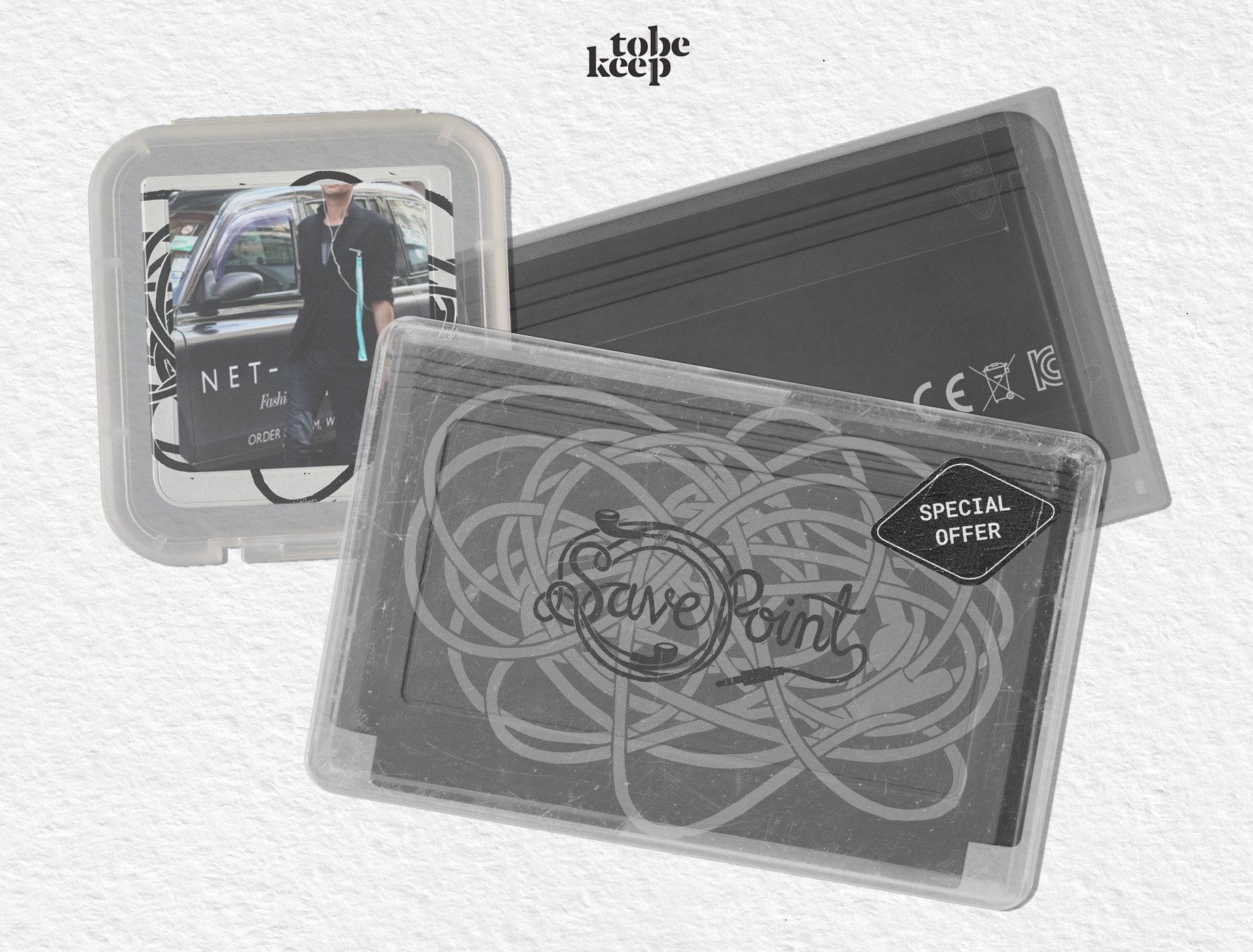
Auditing the 'Starter Zone' effect, the 2026 nostalgia trap, and our attempt to physically pause the game.
Section: The Case Study
Date:16 January 2026
Filed under: The Observation Room / Pop Culture / Consumer Psychology
The Brief
An audit of the 'Time Glitch' phenomenon. Why does life accelerate after the 'Starter Zone' of childhood? We investigate the 2026 resurgence of wired headphones not merely as a trend, but as a psychological defense mechanism. A study on how we use analogue cables to create a physical 'Save Point' in an algorithmic world.
A friend recently posed a question: “Do you feel like time is moving too fast? Think back to childhood - time felt endless. We couldn't wait to grow up and embrace freedom. Now, we’re desperate for it to slow down, or even stop right here.”
I thought about it. It’s not just a sentimental sigh; it feels like a systemic glitch worth auditing. Recall the school holidays - those happy moments seemed to vanish in a blink. Yet, looking back at a single summer from childhood, it feels as long as a lifetime.
Has the time machine been rigged? Or has our internal processor changed?
This feels like a glitch in the rendering. A discrepancy in the data log that demands an explanation. Which means it is time to stop guessing and start auditing.
Welcome to the Observation Room.
1. The Starter Zone
If we view life as an open-world game, childhood is the Starter Zone.
In the Starter Zone, everything is novel. Every encounter with a new NPC, every treasure found, every quest triggered—the system (our brain) is in a hyper-aroused state. To survive and learn, the brain automatically performs high-density "saving." This is the psychological Oddball Effect manifesting in long-term memory. Because the data is entirely new,the Memory Anchors are incredibly dense. Looking back, that period naturally feels elongated and weighty.
As for why time "speeds up," Paul Janet’s Proportional Theory offers a cruel, yet rational, mathematical explanation:our perception of time is relative to the length of life we have already lived.
When you are 10 years old, the past year represents 1/10th of your entire life experience. It is a massive, weighty piece of the puzzle.
But when you are 40, that same year is merely 1/40th.
The denominator has grown. In the face of your massive inventory of memories, the current year is diluted. It is no longer a tenth of your life, but a thin page turned in a rush. This is why we feel time "shrinking"—because, in our frame of reference, its relative weight has lightened.
2. The Predictability Trap
Once we leave the Starter Zone and master the controls, we fall into The Predictability Trap.
We level up (age), and start chasing secular goals: money, reputation, stability. We know the rules. For the sake of efficiency, we start grinding for XP, repeating tasks. To avoid detours, we optimise our path through life.
In this state, lacking fresh stimuli, the brain flags the days as "duplicate data" and selects "Do Not Save."
You feel time moving fast because your brain simply didn't record the details of the week. You just slid from Monday to Friday.
3. The Nostalgia Hack
Since "time acceleration" makes us anxious, selling "the past" becomes the best business model. This is the underlying logic of Nostalgiacore in fashion.
Look at the forecasts for 2026: Neo-Nostalgia. Cigarette jeans, slip dresses, 90s layering. Why does the public buy into this? Is it simply because "fashion is cyclical"? I believe there is a collusion between commerce and psychology at play:
The Lazy Script: Innovation is incredibly difficult. For brands that need to predict the future six months (or more) in advance, replicating a verified 90s style is far safer than inventing an unknown future. Essentially, they are just "Loading Old Saves."
The Artificial Glitch: Why are there so many seemingly incongruous collaborations lately? Crocs x Swarovski(plastic clashing with crystal), Anya Hindmarch x Boots (luxury invading the pharmacy), Apple x Issey Miyake (hard tech wrapped in soft pleats). This isn't just marketing; brands are deliberately manufacturing a "System Glitch." If it were a standard collaboration, your brain would predict it and ignore it. But when crystals appear on Crocs, or an iPhone wears Issey Miyake pleats, this intense Cognitive Dissonance interrupts your autopilot mode. Your brain jolts awake: "Wait, what is this?" Click—save successful. The brand has forcibly inserted an ad slot into your stream of time.
4. The Wired Headphone
This resistance against time is most visible on the London Underground.
I’ve noticed an interesting phenomenon: in an era where wireless headphones have reached their fourth generation and noise cancellation is near-perfect, more and more people—regardless of age—are returning to white, wired headphones. You even see the ironic pairing: the latest iPhone (which long ago abolished the headphone jack) connected to a dongle, trailing a tangled, old-school wire.
This isn't because they can't afford Bluetooth, although the wired option is undeniably the king of value. This is an active choice.
For those who lived through the 90s, it is Time Travel. That wire is a physical connection, reminding us of a slower, analogue era without algorithmic recommendations. That was our "Starter Zone," and it feels safe.
For those exhausted by a world of AI overload and Bluetooth dropouts, it is about Control and Certainty.
They are tired of modern "Battery Anxiety". In a life where everything from our smartwatches to our cars demands to be "fed" (charged) daily, the wired headphone offers unconditional availability. It never dies. It is also a quiet rebellion against the "Upgrade Tax." Why pay a premium for invisible waves and a battery that degrades in two years , when a simple wire offers a visible, unbreakable connection that you won't lose on the track?
They want an "anti-tech" ritual:
No charging.
No pairing.
I plug in when I want to listen; I pull out when I want to stop.
That wire is a tangible "Save Point" they have found within this fast-forward game.
Conclusion
So, the trends of 2026 are not just an aesthetic cycle; they are a form of collective therapy.
Subconsciously, we are fighting the passage of time. We try to deceive our brains by wearing 90s clothes and donning inconvenient wired headphones: "Hey, we're still in the Starter Zone. The game isn't over. Time is still slow."
It is a romantic self-deception. Although I know it is just a trick of the mind, I have decided to knot my white shirt, put on my wired headphones, and play Britney Spears' “...Baby One More Time”. After all, if time is destined to fast-forward,I might as well choose a better soundtrack.
Takeaway
Keep: The Wired Headphone. Not just for the music, but for the Certainty. Keep the physical tether that reminds you: "I am here, in the moment, not in the cloud."
Let Go: Battery Anxiety. Release the fear that you are "falling behind" if you don't upgrade. The game doesn't end just because you paused to save.
R.
tobekeep / Observation Room
