
Field Note 002: The Object Store
Location: Kuala Lumpur (The Hidden Staircase)
Date: 05 January 2026
Visit Time: December 2025
Category: Curation / Vessel Audit
The Brief: Tactile Spillover
Since transitioning to pour-over brewing, my understanding of the "vessel" has been rewritten. It began with a pair of Crooked Clay cups acquired years ago—black and white lines that predetermined my aesthetic standards before I even ground my first bean.
But now, this obsession with texture has spilled over the brim of the coffee cup. The precision of the ritual (Weigh → Grind → Pour) has awakened a hyper-awareness of "Hand-feel." I am no longer looking for mere containers for liquid; I have begun to audit the tactile feedback of every object in my life. I seek not just tools, but entities capable of transmitting Tactile Data.
Dimension 1: The Hunt (The Filter of Intent)
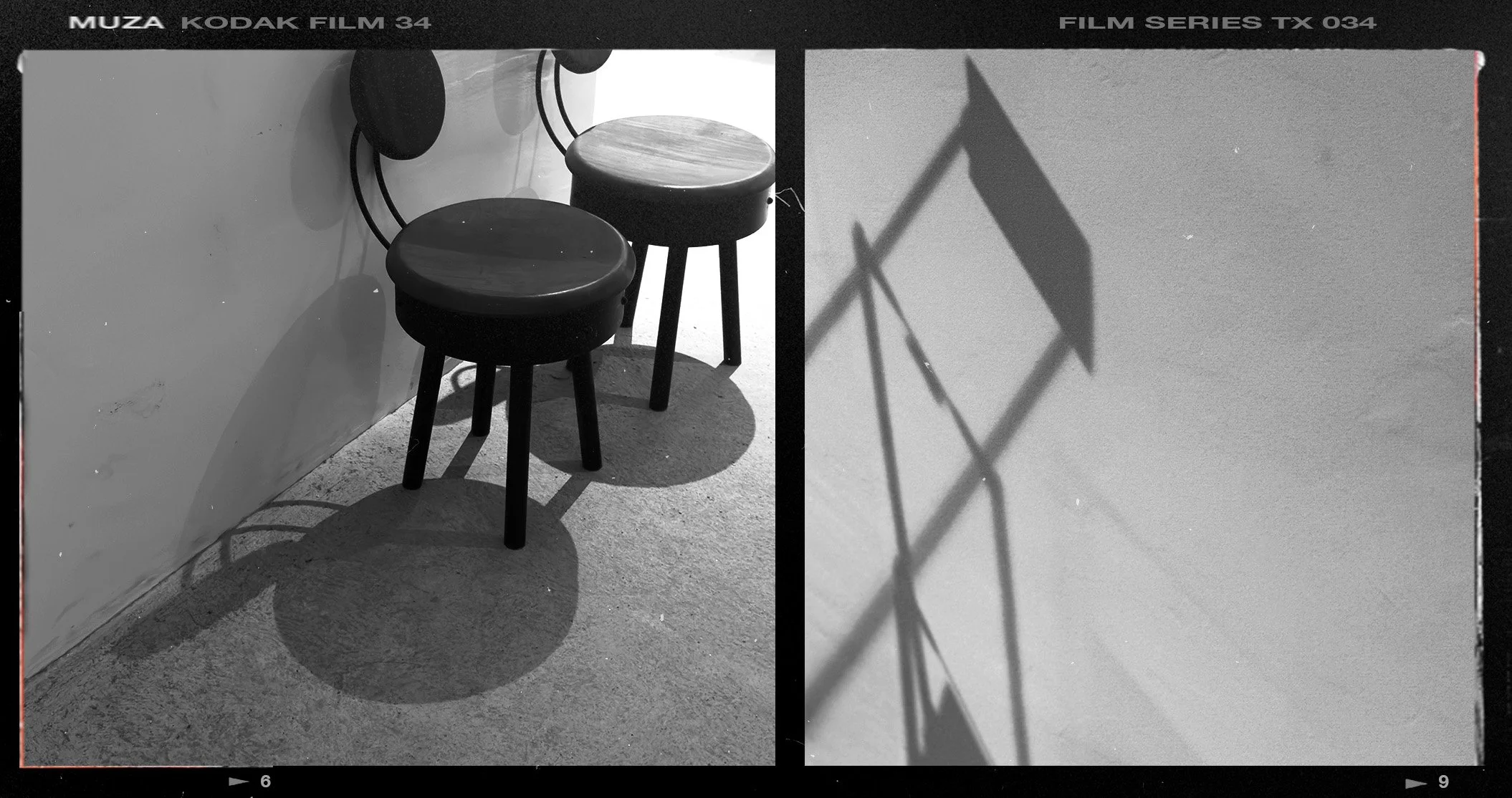
The store does not scream for attention; it requires intent. It took me three days to decode its coordinates—tucked next to a restaurant, up an obscure staircase that evoking the 'Upstairs Shop' culture of Hong Kong.
This friction is a filter. The climb ends at a single, floor-to-ceiling glass door. In the dim, utilitarian stairwell, it acts as a luminous threshold, framing the amber glow of the interior like a specimen in a lightbox. Stepping through is a physiological recalibration: the humid noise of the street vanishes, replaced by a "Japandi" silence so thick you can almost hear the dust settling on the ceramics.
Dimension 2: The Space (A Dialogue of Eras)
The interior is a sophisticated study in contrast—a silent argument between the Linear and the Organic.
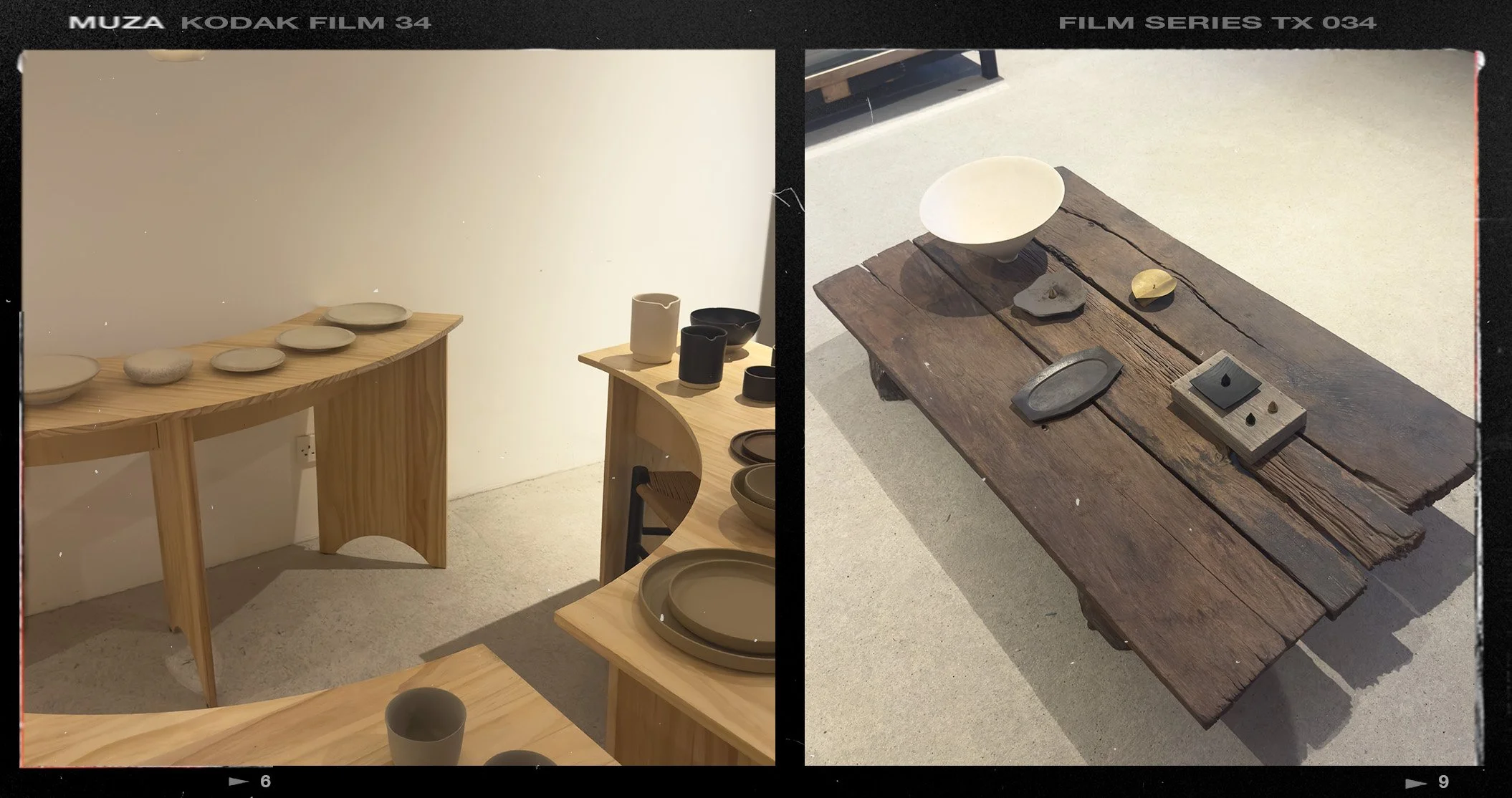
A pale, curvilinear plywood table snakes through the room, its "C-shape" breaking the rigidity of the walls. It acts as a neutral canvas, allowing the dark ceramics to "pop" like punctuation marks. Anchoring the corner is a massive, vintage apothecary cabinet; its grid of small drawers suggests a history of preservation, creating a heavy, dark counterpoint to the light, floating table.
Above, a Louis Poulsen PH 5 lamp offers a nod to industrial perfection, while a rough-hewn railway sleeper grounds the space in raw weight. It is a space that understands that to appreciate the new, you must first acknowledge the old.
The Unexplored (The Tea Room): Hidden within the layout is also a dedicated space for coffee and tea—a sensory lounge I glimpsed but could not enter due to the tyranny of time. Yet, in the philosophy of curation, regret is a form of anticipation. Leaving a corner unexplored does not feel like a loss; it feels like a promise. The unfinished audit is the perfect reason to return.
Dimension 3: The Sensory Interface (Scent Audit)
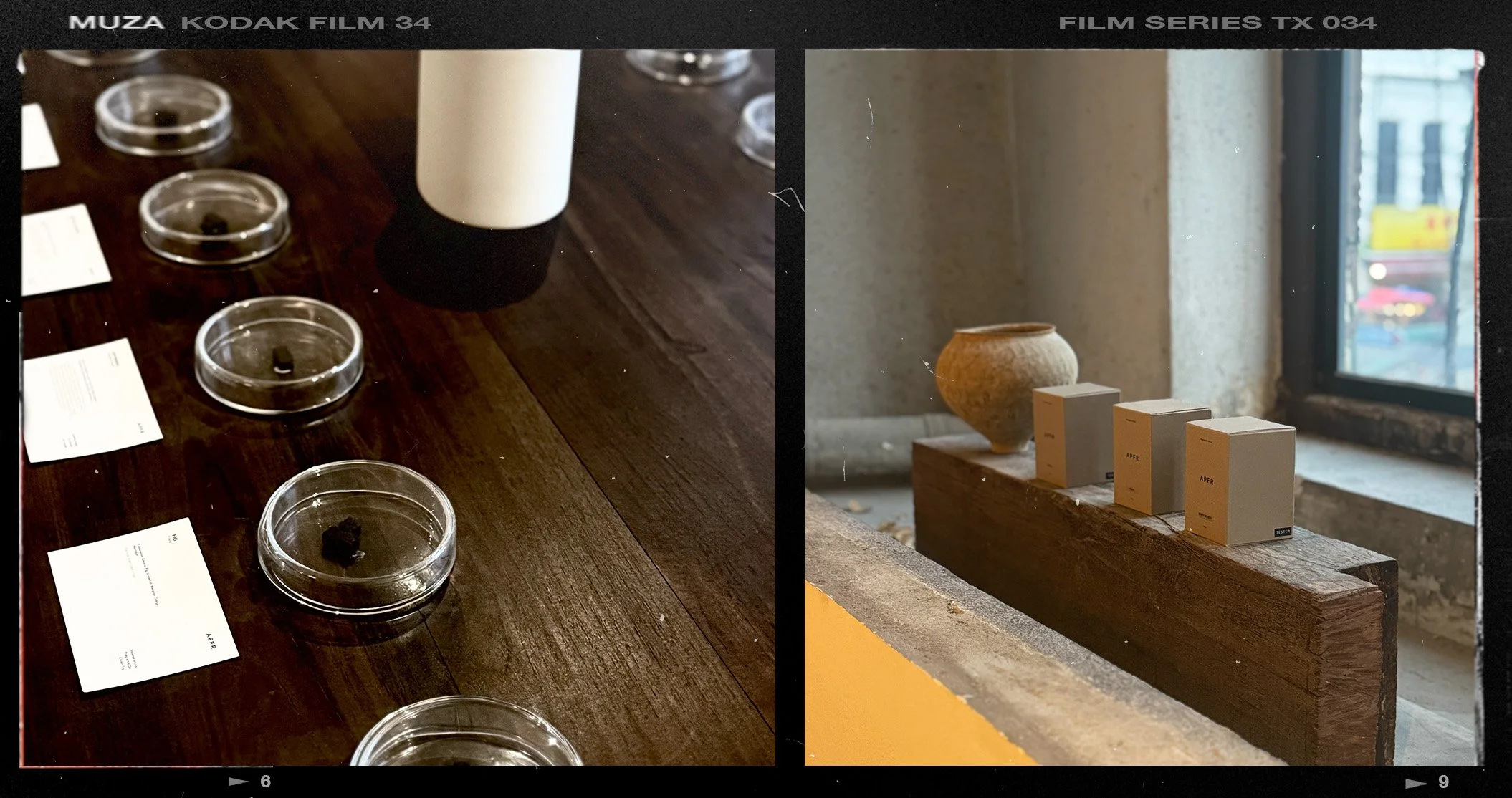
On a long walnut table, petri dishes are aligned with laboratory precision. This is "Dry Testing" via infused wood and stone, presented like archaeological finds.
Scent is the most subjective architecture; it cannot be "taught," only felt. My picks—Avenue and Sunny Day—resonated as clean, structural profiles. However, the Musk triggered an immediate physiological rejection, a sharp headache that reminded me: Your senses are the ultimate auditors. They do not compromise.
Dimension 4: The Object (Organic Autonomy)
Artist: Hironobu Ishikawa (石川裕信) The Acquisition: Two small plates (Black & White).
I left with two plates that defy the binary of "Perfect vs. Imperfect." They are not perfect circles; they are not mass-produced clones. There is no flashy glaze, no hyper-detailed craftsmanship, no transparency. I couldn't even find the artist's signature.
This is not "Imperfection"; this is "Organic Autonomy."
The plates exist in their own elemental state—grounded and raw. They are simply "doing themselves." The scuffs on the bottom and the uneven carbon shading are not flaws; they are proof that the clay was allowed to speak without being silenced by industrial standards. The variance is the signature.
The Takeaway: The Collection Paradox
As I left, the internal monologue kicked in: "What about minimalism?"
The tobekeep answer: Minimalism is not about the absence of things. It is about the presence of resonance. These plates are not "clutter"; they are Tactile Data—tools I will use to calibrate my daily rituals.
I am not breaking my rules; I am refining my collection.
R.
