
Olfactory Intrusion
On jasmine, blotter strips, and scent without an exit
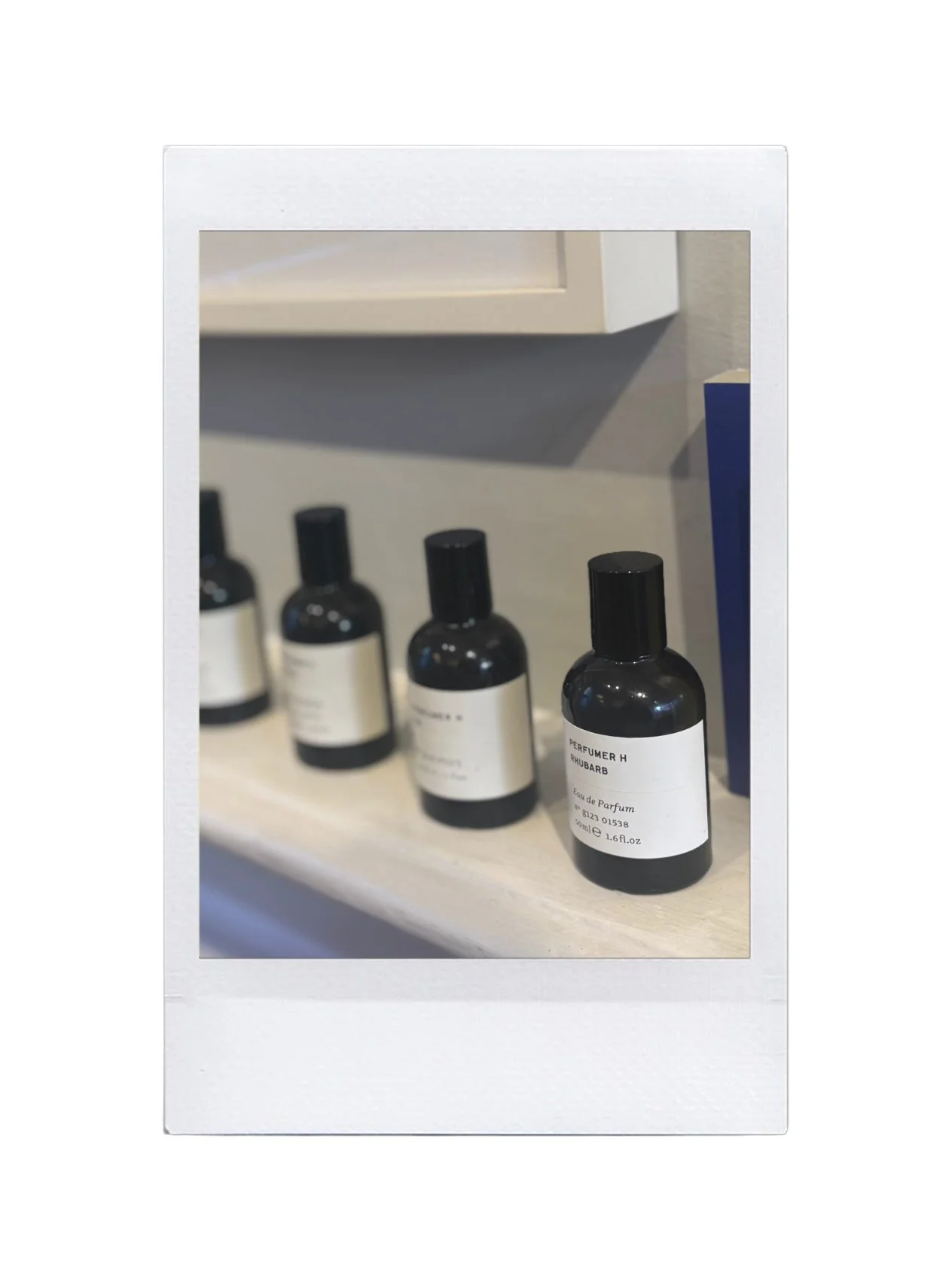
Object: Perfumer H Ink
Filed under: Scent · Exposure · Boundary · Bodily refusal
There were about ten of us seated around a long table at the back of the restaurant. It was a semi-enclosed space. Air could move through it, but not quickly enough to deal with everyone’s perfume. The first thing I noticed was jasmine: dense, powdery and far too sweet. The scent seemed to enter the room before the person wearing it. I frowned almost immediately.
At the same time, I was trying to welcome guests, remember the names and ideas behind several independent brands, and follow a number of conversations taking place around the table. The scent kept interrupting me. The pain began at my temples. Painkillers did nothing, and my stomach soon started to turn. When the conversation gave me an opening, I slipped into the lavatory and was sick.
For years afterwards, I treated that incident as sufficient evidence that perfume and I were probably incompatible by nature. It was a perfectly reasonable conclusion. The problem was that it never stopped me from walking into perfume shops.
Even now, whenever I see an interesting brand or name, I stop. My testing routine is well established: find the brand, read the name, remove the cap and smell whatever remains inside. Most perfumes do not make it past this stage. If the first smell makes me frown, I put the cap straight back on. Only if I can tolerate it, or if it is strange enough to make me curious, do I spray it onto a blotter strip.
I smell it once. If it does not work, I throw it away immediately. If it still seems interesting, I wave the strip a few times, let the scent disperse in the air, then smell it again. Occasionally, it comes home with me. This is clearly not the behaviour of someone who simply hates perfume. It is closer to an inspection procedure: the cap gives me a preview, the blotter confines the scent to a small piece of paper, and I can end the contact at any point.
That procedure fails when someone wears perfume heavily. Concentration is certainly part of the problem. Sweet florals, musk and jasmine are especially likely to make me unwell when used without restraint, but concentration alone is not what makes me irritable. The scent moves with the person. It enters lifts, spreads across meeting tables and remains in the air after the wearer has left. I may already have received all the information I wanted, yet it keeps reminding me that it is still there. I sometimes joke that the person must have drunk the perfume. It is not a particularly kind joke, but the bodily judgement behind it is accurate: the fragrance no longer seems to have been sprayed onto someone. It seems to be radiating continuously from every available surface of their body.
I cannot dispose of the person as politely as I can dispose of a blotter strip.
For a long time, this was the distinction I had missed. I was not dealing only with the difference between pleasant and unpleasant smells, but with two different forms of contact: one scent I approach voluntarily; another enters my space. One can be examined. The other decides on my behalf how long the contact will continue.
A scent on a blotter strip can put the body on alert without becoming an intrusion. Musk, florals or some note I cannot yet identify may still make me draw back instinctively, but the discomfort remains contained within a clear boundary. The strip is small, and the distance is controlled by my hand. I can bring it closer again or put it down. It becomes interesting precisely because I know I can leave at any moment. The alarm is still there, but once placed inside a sufficiently safe frame, the alarm itself becomes readable.
I am not always trying to choose a perfume to take home. Most of the time, I am simply building an index of the body’s reactions. Nor does every scent I find beautiful belong on my skin. I often like lemon or citrus fragrances. Some marine scents feel fresh and clean, and I enjoy certain ones on my partner. On him, they seem easy and unaggressive. I would not buy them for myself.
“It smells good” and “it smells like me” have never been the same judgement. The first evaluates the perfume. The second means my body will have to carry it.
Once scent reaches the skin, it is no longer an object held at arm’s length. It warms, changes and takes part in deciding how a person enters a room. A perfume may smell beautiful without being something I am willing to let speak on my behalf. Liking it does not mean I have to own it.
Perhaps that is why Perfumer H’s Ink surprised me. When I first visited the shop, Ink was not the bottle I was most inclined to choose. Another fragrance, one with the suggestion of rain, impressed me more at first. Even so, I deliberately sprayed Ink onto my skin and left it there. The first time I smelled it, I could not immediately connect it with ink. Floral? No. Musk? No.
I could not say what it was. It felt dry and dark, slightly aged, with a faint current of air passing through it. Looking back, it was a little like taking a sheet of old paper stained with ink from a wooden desk on a bright day. It was not overly sweet, not floral, and not like anything in a hurry to be liked.
Then it slowly opened. Heat thinned the scent, and the dry inkiness began to merge with the body. What had seemed slightly severe at first became quieter and more credible than the fragrance I had originally preferred.
Eventually, the dark bottle appeared in my dressing cabinet.
I do not wear it every day. I usually reach for it when I need to become more outward-facing: attending an event, entering a business setting, walking into a room full of strangers, or on an evening when the extroverted version of me needs to report for duty on time. It has not made me more sociable. Assigning that job to a bottle of perfume would be giving it far too much credit.
What it does is draw a clean edge around the version of me that has to appear in public.
I can smell it near my wrist, but it does not turn the entire room into its territory. It does not imitate sweetness or stage an embrace no one invited. It smells like an object with a surface.
For a long time, I believed my body was rejecting perfume as a category. The evidence had certainly been dramatic enough: the frown, the headache, the vomiting in a restaurant lavatory. Yet my behaviour at perfume counters had always contradicted that conclusion. I never stopped approaching scent. I merely built a strict procedure around the approach: cap, blotter, distance, waiting, disposal. Even the fragrance I finally chose had to prove itself on my skin before it was allowed to come home.
The body had not issued a single verdict on perfume. It was distinguishing curiosity from occupation, choosing to wear from being forcibly surrounded, and a fragrance that remained near the wrist from one that attempted to take possession of the entire room.
What I dislike is not perfume, but scent without an exit.
When I need to appear in public, Ink stays where I place it: close to the body, dry at the edges, perceptible only at close range.
It knows where to stop.
