Writing
Writing that begins with ordinary things: what they ask of us, what they reveal through use, and why some resist easy explanation.
The Bag That Carries Every Day
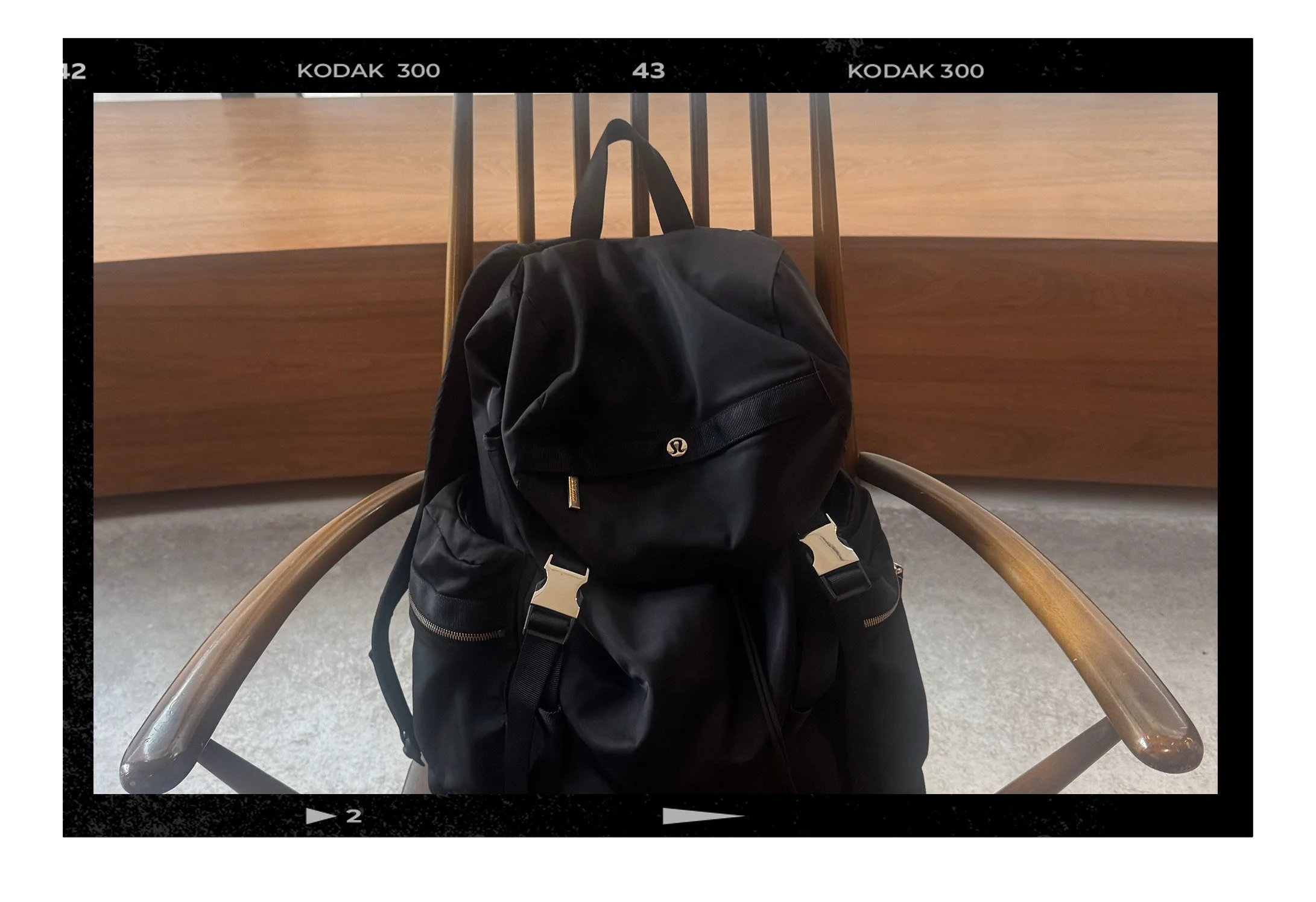
A large backpack bought for occasional business trips became the bag used almost every day. Its value lay not simply in capacity, but in the decisions it had already settled before an unpredictable working day began.
Truth isn't always found in big data sets. Sometimes, the signal is hidden in the quiet corners of conversation. This article reveals the Source Code of our research. We did not run a shallow survey of 1,000 people. We conducted 13 semi-structured, deep-dive interviews to understand the logic—not just the statistics—of why we choose what we choose.
A dupe is more than a sale lost; it is a signal sent. For brands, imitation is a complex mix of free marketing, signal fatigue, and a direct challenge to innovate. Understanding the "Dupe Economy" helps us see the larger game.
The Mechanism: Dupes cut three ways: Acceleration (buzz), Substitution (loss), and Overexposure (death).
The Response: Smart brands stop fighting the visual war and move value to what is hard to copy: Cut, Cloth, and Service.
Minimalism promises freedom through subtraction. But when it shifts from a tool of liberation to an obsession with control, the system turns on itself. It creates a specific illusion: Control via Emptying. We see constant editing, aesthetic austerity, and shopping churn dressed in beige. True freedom isn't found in an aesthetically perfect, empty room. It is found in building a flexible, resilient inner order that can support your actual life.
Media and algorithms have conflated two very different things: Quiet Luxury (a design philosophy) and Old Money Aesthetic (a social tag). By equating the two, they created a trap. Millions bought budget "dupes" hoping to purchase the feeling of generational wealth. But this was a form of self-hypnosis. The trend collapsed because of a double failure:
Psychological: True Quiet Luxury is inherently solitary, which most people cannot endure.
Economic: The gap between the "Old Money" costume and the bank account reality created a void that no beige jumper could fill.
When the logo is silent, how do we judge worth? Our senses take over. We begin to read the subtle language of fabric, fit, and construction. Quiet Luxury is not a brand list. It is a signal system based on three technical pillars: Cut, Cloth, and Composition. This guide is about re-calibrating your definition of "Good" from something that is declared (by a label) to something that is felt (by the hand).
Your feed is not a mirror. It is a training ground. Algorithms and incentive structures do not just reflect your taste; they script it. They teach us what "acceptable cheating" looks like and cluster our desires into neat, shoppable boxes. This report is about reclaiming agency. We do not suggest logging off (unrealistic). We suggest introducing deliberate frictionto ensure the next thing you want is truly yours.
You are not one single shopper; you are a committee. The Pragmatist, the Purist, the Player—each is a stakeholder with a different KPI. By naming these inner "Buyer Personas," we turn a confusing internal monologue into a strategic dialogue. Know who is chairing the meeting today, and the choice becomes clearer.
Feelings are not noise. They are data. The fitting room (or the checkout page) is a pressure chamber. The Guilt, Pride, Relief, and FOMO you feel there are specific metrics. They reveal the gap between who you are and who you want to appear to be. Learning to decode these signals is a quiet act of self-reconciliation.
Not all signals are equal. Some are decoration; others act as legally protected signatures.
Generic Style: Open source. Anyone can use it (e.g., a Breton stripe shirt).
Source Identifiers: Proprietary code. Protected by law (e.g., the specific Adidas three-stripe spacing). Learning the difference turns you from a passive consumer into a discerning auditor of objects.
Fast fashion did not invent copying. It industrialised time. By shrinking the cycle from runway to reality down to mere weeks, the industry has fundamentally reshaped our patience. To understand the engine is to see the invisible currents that shape our sense of "now." It trains us to treat clothing not as durable goods, but as perishable data.